
Module 2

IN THIS LESSON
Understand Your Triggers
Identify the situations, behaviours, or words that activate your stress response.
Learn to notice when you’ve been pulled out of your Window of Tolerance — and discover practical tools to return to calm and connection.
🎧 Guided Body Scan
Printable Tool Sheet: Simple, effective practices to bring yourself back to a grounded, responsive state whenever you need it.
Recognising Your Emotional Triggers
Emotional triggers are moments that spark a strong reaction in you—often more intense than the situation seems to warrant. A child’s tantrum, defiance, mess, or emotional outburst can stir up implicit memories of being ignored, powerless, overwhelmed, or disrespected. Instead of judging yourself for how you react, try to see these moments as invitations to get curious. They offer valuable insight—not evidence that you’re failing.
That said, it’s not easy to understand what’s really happening when you’re caught up in the heat of the moment. And that’s completely okay. It’s often more helpful to reflect after the moment has passed—when things have calmed down and you can look back with greater clarity.
Ask yourself:
What was I feeling in that moment?
When have I felt this way before?
What did that situation remind me of?
These small moments of reflection help you begin to connect the dots—and awareness is the vital first step toward change.
Mapping Your Window of Tolerance
Now that you’re starting to notice your emotional triggers, let’s explore how these triggers affect your ability to stay grounded and connected in the moment.
Think of emotional regulation like a window—your Window of Tolerance. When you’re inside this window, you feel steady, present, and free to choose how you respond to your child. Even when you feel angry, sad or agitated. This is where you’re most aligned with your values as a parent.
But when something pushes you outside that window, it becomes much harder to think clearly and respond to here and now. That’s when your stress response kicks in, and you may say or do things you later regret.
Learning to map your own window helps you understand what regulation feels like in your body, and notice the signs that show up when you’re beginning to move out of it.
You’ll find a graphic illustration of the Window of Tolerance below.
One helpful way to stay aware is to check in with yourself regularly throughout the day. Notice how you’re feeling are you calm and steady, or beginning to feel overwhelmed or shut down? Mapping your state can help you recognize when you might need to take steps to regulate.
Signs of Hyperarousal:
Racing thoughts
Yelling or snapping
Feeling panicked or on edge
Soothing Strategies to Calm Your Nervous System
Take slow, deep breaths—inhale through your nose for a count of 4, hold for 2, then exhale slowly through your mouth for a count of 6. This activates your body’s relaxation response.
Ground Yourself: Focus on your physical body by grounding your feet on the floor or your back against the chair. Notice the weight and support. This helps anchor you in the present moment.
Use Soothing Touch: Place a hand on your heart or gently rub your arms or neck. Gentle touch can send calming signals to your nervous system.
Engage Your Senses with Comforting Stimuli: Look at something calming like a picture or nature outside, listen to soft music, or smell a familiar scent like lavender or vanilla.
Speak in a Soft, quiet voice. Talking quietly to yourself and your child can help slow down your nervous system and create safety.
Practice Mindful Awareness. Notice your thoughts and emotions without judgment. Simply observe and remind yourself that this feeling will pass.
Signs of Hypoarousal:
Zoning out
Feeling like you’ve “shut down”
Difficulty engaging with your child
How to Upregulate: Gentle Ways to Re-Engage Your Energy
Upregulating means gently bringing yourself back to feeling more awake, alert, and connected.
Try gentle movement: walking, stretching, or even dancing. Moving helps activate your nervous system and brings energy back.
Sitting or standing up tall with your shoulders back and head lifted sends signals of safety to your brain, helping you feel more engaged.
Use Your Senses: Notice what’s around you. Try naming 5 things you see, 4 things you hear, and 3 things you feel. This helps bring your attention back to the present moment.
Hum or Sing: Making sounds like humming or singing can stimulate your nervous system and help you feel more alive.
Name How You Feel: Simply noticing and naming your emotions (for example, “I feel angry”, “I feel tired” or “I feel disconnected”) helps you become aware and begin to shift your state.
Connect with Someone You Trust: Talking to a friend or loved one, even briefly, can help your nervous system feel safer and more regulated.
Remember, upregulating is about gently inviting your body and mind to come back online—not pushing yourself too hard. These gentle tools help you feel more present and ready to engage with your child and the world around you.
Downregulating isn’t about avoiding emotions—it’s about creating enough space inside to respond thoughtfully rather than react impulsively.
Both hyperarousal and hypoarousal are natural ways our bodies respond to stress, but staying in either state for too long makes it hard to stay connected with your child. That’s why learning to return to a balanced state—self-regulation—is such an essential skill in parenting.
Using these strategies helps you:
Regain control
Reconnect with your child from a grounded, centered place
Return to a state of balance and safety ❤️
Understanding your own emotional landscape is the first step to creating safety—not just for yourself, but for your child too. Your regulated nervous system becomes a safe haven for theirs. You show them:
🌱 That emotions are safe to feel, not something to fear or suppress.
🪞 How to name and navigate big feelings with compassion.
🛡️ That boundaries are healthy and protective, not a rejection.
💞 That connection is possible even in moments of stress.
By modeling emotional awareness and regulation, you equip your child with the foundations of resilience and security. Building on strategies for upregulating when you feel shut down and downregulating when emotions run high, the following section offers practical tools to support you in the heat of the moment.
💡 Self-Regulation Strategies for In-the-Moment Parenting [You can download and print this tool from the Printable Tools section at the top of the website. Keep it handy for quick reminders whenever you need them.]
When you’re triggered, your nervous system needs support to feel safe again. Keep this list handy—print it out and place it somewhere visible, like your fridge—to remind yourself of ways to reconnect and stay present with your child:
Name what you’re feeling: Say to yourself, “I’m noticing a lot of [name your emotion: e.g. anger] right now.” Naming emotions helps bring awareness and creates space between emotion and response.
Pause and breathe: Place one hand on your heart and one on your belly if that feels comfortable. Take slow, mindful breaths to steady your nervous system.
Ask yourself, “What do I need right now?” Sometimes stepping away for a minute—leaving the room or stepping outside —can give you the space to reset.
"I feel like I’m about to explode, but I can stay grounded and respond with care. Thank you, my stress response, for trying to protect me."
You can also try visualizing a protective bubble around you, creating a safe space that helps you stay calm and centered.
Use a grounding object: Carry something tactile like a bracelet, a smooth stone, or a textured object in your pocket. Having a comforting scent, such as lavender oil or a scented bracelet, can also soothe your nervous system.
Repeat a grounding mantra: “I am safe. My child is safe to feel. I can handle this.” This reinforces a sense of safety and control.


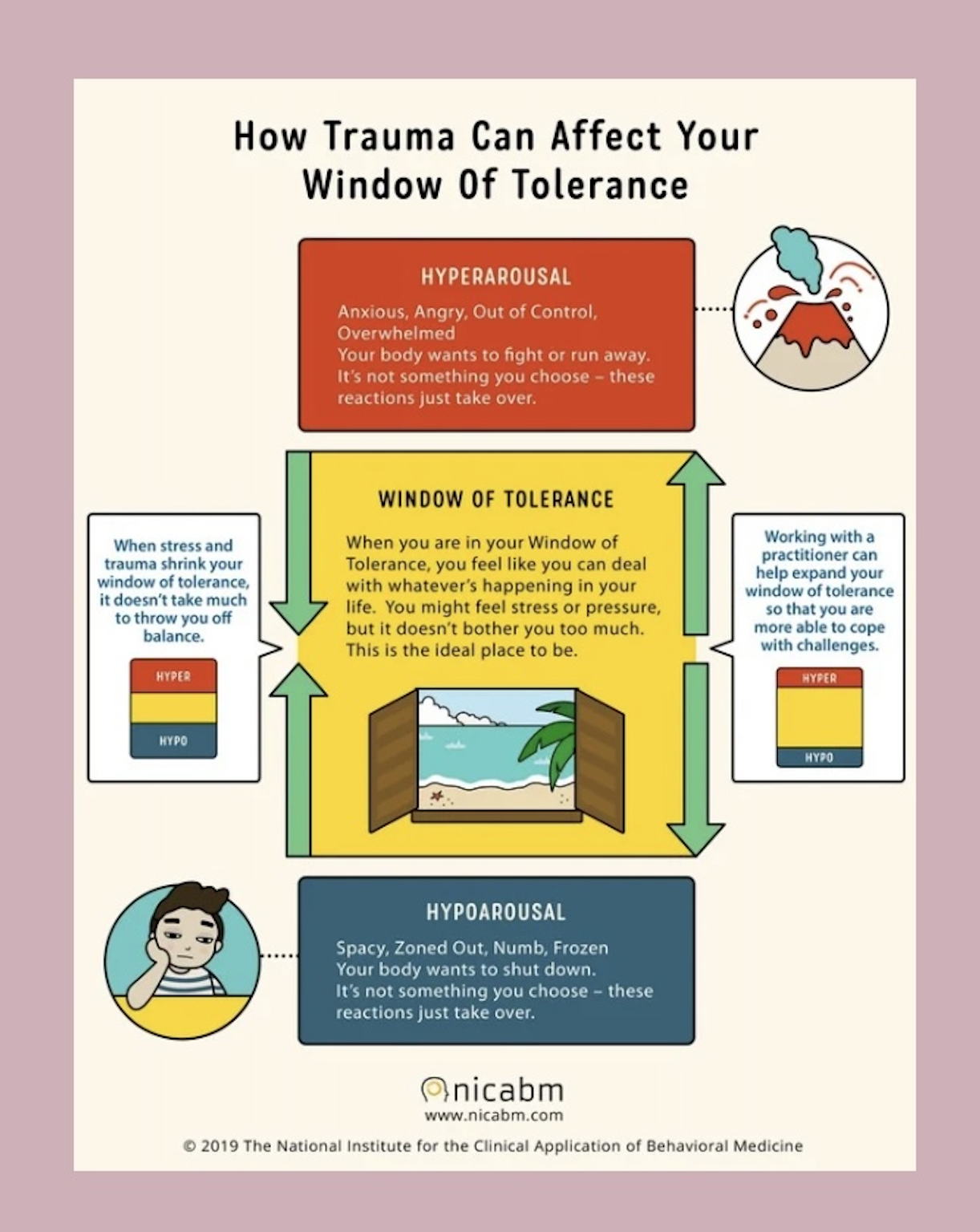
Above the Window (Hyperarousal) – You might feel overwhelmed, anxious, angry, reactive, or like everything is too much. It can feel like you're running on adrenaline, ready to explode or flee.
Within the Window (Optimal Arousal)
When you’re within your Window of Tolerance, you feel calm, grounded, and present. You can think clearly, manage your emotions effectively, and respond to your child with intention. This is where you’re most connected to yourself and aligned with your parenting values.
Below the Window (Hypoarousal) – You might feel numb, disconnected, frozen, or shut down.
The goal isn’t to stay inside the window all the time, but to notice when you’ve been pushed out and practice coming back to balance.